great minds must think alike!!!
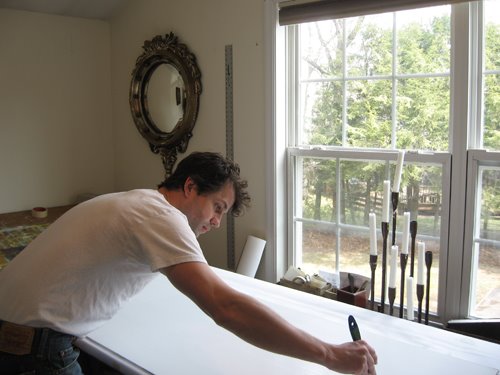
 this is one of those symbols that existed in numerous ancient cultures at the same time. It is a sacred symbol and is very interesting to construct and paint. I amde this today..it takes a long time to make one of these paintings


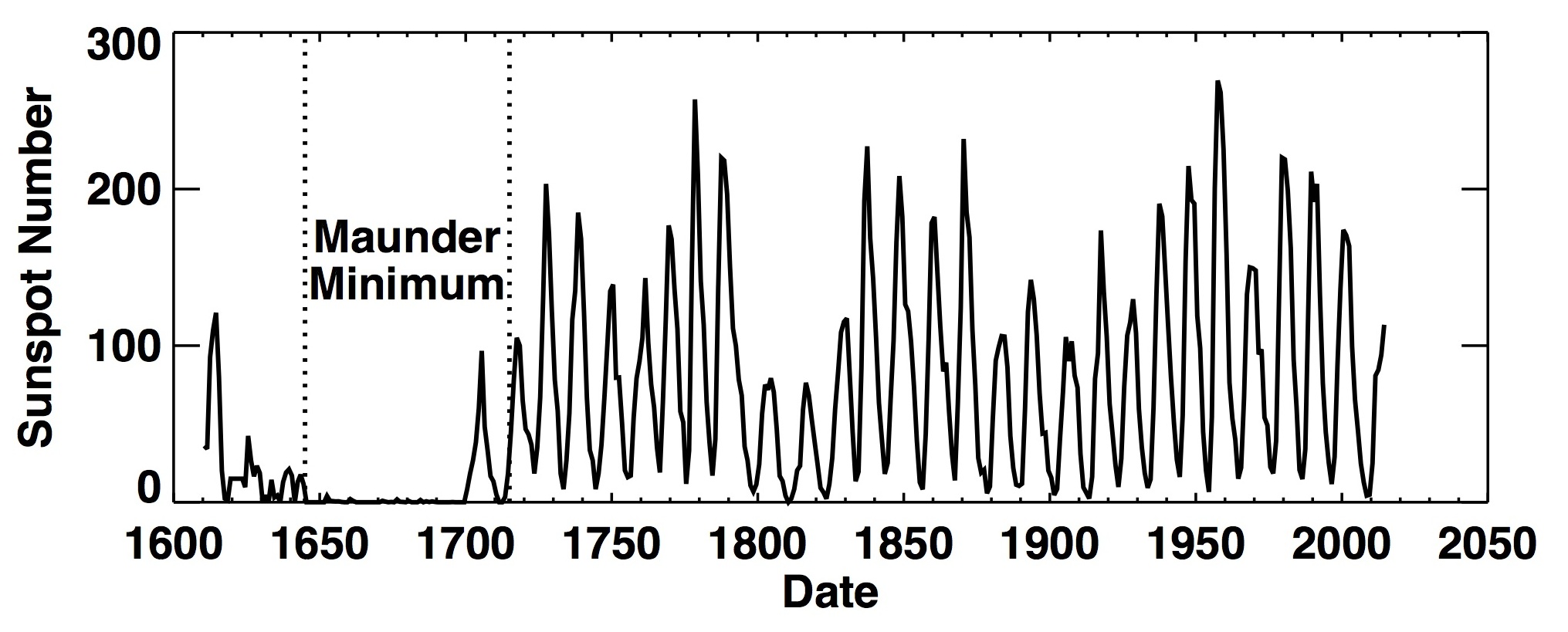
 scientists have been very concerned lately. There has been almost zero sunspot activity for a very long time. Nasa has even started to have conferences regarding this fact. Today there are small sunspots in upper right of this picture.
Early records of sunspots indicate that the Sun went through a period of inactivity in the late 17th century. Very few sunspots were seen on the Sun from about 1645 to 1715 (38 kb JPEG image). Although the observations were not as extensive as in later years, the Sun was in fact well observed during this time and this lack of sunspots is well documented. This period of solar inactivity also corresponds to a climatic period called the "Little Ice Age" when rivers that are normally ice-free froze and snow fields remained year-round at lower altitudes. There is evidence that the Sun has had similar periods of inactivity in the more distant past. The connection between solar activity and terrestrial climate is an area of on-going research.
 here is a painting by one of the strangest artists of all time. I like his work and it has influenced me in a largely subconscious way. I like artist who paint thinks that are seen only from the corner of ones eye.
Great art is more than a treat for the eye or a tonic for the spirit. Truly great art is an expression of the innermost soul of a people: an expression of that people's yearnings and ideals, of its deepest hopes and joys, of its meaning and purpose.
Is there anything which Americans need more today than a renewed sense of purpose in their lives? Our forefathers in Europe strove to uplift themselves and their people to new levels of greatness. The best of them saw their purpose as the elevation of man, and they were often able to inspire their fellows with the same feeling of purpose. In America today there seems to be little, if any, sense of purpose beyond the individual accumulation of material wealth and the pursuit of pleasure. This aimlessness has taken an enormous toll, not only in lives destroyed by drugs and alcohol, but even more in the degeneration of our national life.
Today the great standards which guided us in the past have been ridiculed, belittled, and torn down. This is true of art, which in turning to modernism has lost all meaning for the American majority, and it is true of most other aspects of our social and cultural life. In view of this it is hardly surprising that so many of our young people are leading confusing lives and are looking to the future without hope.
It need not be this way. We can have standards again. We can renew the purpose and meaning in the life of our people. The great art which inspired and guided our forefathers is not dead. It lives today in the magnificent sculpture of Arno Breker. His art is the living expression of the same spirit which inspired the Greeks of the Classical Age and which flowered again during the European Renaissance. It can also inspire Americans in these dark days and guide them again to the light.
Classical art is the true art of Europe, the true art of our people. This is why so many great leaders of the past--Napoleon, for example--took care to instill Classical ideals in their citizens. This is why they commissioned artists to create art in the Classical tradition for state buildings and public monuments, to serve as a standard and an ideal for the government and for the people. They knew that only with great and noble ideals is it possible for a nation to achieve and maintain greatness.
Greatness is what we want for America. Our hearts yearn for a great culture once again, for great deeds once again, for great heroes once again. We yearn for the elevation of our people, for the bringing forth of a higher man: a man of will and purpose and greatness of spirit. We want our people to glorify the great, the noble, the beautiful, and the divinely creative once again.
"Eighteen hours wasn't enough."
My Freedom Bird touched down at Travis Air Force base in southern California on November 3, 1968, two days before Richard Nixon was elected President. When our landing gear touched the runway, almost every soldier, Marine, airmen and sailor aboard that plane cheered and howled.
At Travis, many of us headed for the bathrooms to change our uniforms. We shed our tropical khakis and donned our dress winter greens. From Travis, a group of us took a bus ride to the San Francisco Airport to catch our flights home. At the airport, the men on the bus, veterans who had been traveling together since leaving Nam more than eighteen hours earlier, shook hands, wished each other luck, and walked off in different directions.
With duffel bag slung over my shoulder, I went looking for an airport bar to have a cold beer and call home. Throughout the long flight from Nam, I had this knot in the pit of my stomach. I couldn’t figure it. It wasn't my fear of flying. It was something else. Unlike the other veterans on the plane, I hadn’t cheered when the plane landed. A beer would help relax me, I thought.
As I walked through the terminal looking for a bar I noticed the way civilians looked at me. The stares of some made me uneasy. I was sure it was the uniform. A beer would help. But first I had to call Brooklyn and let my family know I was back in the States.
I found a bar with a phone booth in the back. A single customer sat at the bar, a middle aged man in a gray business suit. The bartender watched me as I walked to the back of the bar. I dropped my duffel bag outside the booth, closed the door and made the long distance call. As I waited for someone to pick up at the other end, I glanced at the bartender. He was watching me. It's the uniform again, I thought.
I heard my eighteen year old kid sister on the phone. It was great. Hearing her voice helped ease the tension in my gut. When she realized who was calling, she became excited on the phone. She was happy I was safe in California. She asked for my flight's expected arrival time in New York so she could invite family and friends over the house for a homecoming party. I told her I didn’t want a party, at least not for a few days. She sounded disappointed, but said she understood. That's what I wanted, I said.
After the call, I looked forward to a cold beer. I picked up my duffel bag and walked over to the bar. The bartender was waiting, looking as if he expected trouble. I ordered a beer.
"I'm sorry soldier," said the bartender, " but I need to see some ID. You have to be twenty-one to drink in California. I’m sorry, but it’s the law." He was a big guy, half-a-foot taller than me, yet he seemed nervous asking me for ID.
I remember thinking he was joking. This is a comedian, I thought, who liked playing jokes on soldiers coming home from the war. I expected him to bust out laughing and tell me he was joking, maybe even offer me a beer on the house. So I waited, waited for the him to bust out laughing, to tell me he was joking, to ask me what kind of beer I wanted.
The place was empty except for the middle-aged man in the gray suit who sat a few stools away at the bar. I looked at the stranger. "He's kidding, right?" I said, not really expecting an answer. I turned back to the bartender and repeated my question, "You're kidding, right?"
"It's the law in California," he said, a little too loudly. "I'm sorry. I don’t like it, but it’s the law. Soldiers come in here all the time and I have to ask them for ID. I don't like it, they don't like it, but if you’re under twenty-one and I serve you alcohol I can lose my job."
I could see he was dead serious. He wasn't going to sell me a beer unless I could prove I was twenty-one, which I wasn’t. I wasn’t sure how to react. Wasn't it obvious I had just flown in from Nam. At first, I was more embarrassed than angry. Then I realized the situation was actually absurd, hilarious even. I began to laugh. I think the bartender misinterpreted my laughter for something more ominous. He started shaking his head, perhaps thinking I was about to do something crazy. After all, I had just emerged from a jungle war eighteen hours earlier. The bartender's concerned look kept me laughing. I realized this poor bastard was going through this shit with young veterans all the time. Maybe he'd gotten into a fight or two. Maybe police were called, arrests made.
For me, it was embarrassing, sad and funny all at once. There I stood in my dress greens, an airborne trooper back from the war, wearing a rainbow of ribbons on my chest, jump boots on my feet, trousers bloused, enemy shell fragments embedded in my jaw and neck, an airborne cap cocked to the side of my head. I didn't feel the part, but I looked like a goddamn war hero. But to the State of California and this bartender, I was still a minor.
This meant one thing. I was back in the Real World. The war was back there somewhere, with its own terrible rules. Goodbye to all that. For me, the war was over. I was now expected to live by a another set of rules. In the Real World they had rules about who could and couldn't drink beer. The problem was that I didn't have a switch in my head that I could flip to make an immediate adjustment. I wasn't ready to accommodate these new rules. It was too sudden. Eighteen hours wasn't enough. I still had this knot in my stomach. I was thirsty. I needed a beer and didn't really give a shit about the laws of California. My uniform was my fucking ID. The situation stopped being amusing.
The bartender was still talking but I wasn't listening. I watched the bartender as he took a bottle of beer from the refrigerator behind the bar and brought it to the only other customer in the place, the middle aged man in the suit. The refrigerator had big glass doors. I could see the cold, green and brown bottles of beer inside sitting on the shelves. I decided I would walk behind the bar and take one. I would warn the bartender so he wouldn't think I was coming after him. I didn’t want trouble. I would tell him up front I was going back there and get a beer and pay for it and since he wasn't serving me he shouldn't worry about losing his job.
I prepared myself for a scrap; but just before I spoke, the man in the suit took the bottle of beer just handed him and gently pushed it toward me, leaving it on the smooth, shiny bartop within my reach.
"Welcome home, soldier," said the stranger in the suit. "The beer’s on me."


 I decided to repost this for fun..I made this study a year ago---It shows how leonardo grouped his figures..I didnt copy this--it is my own theory.
 ralph albert blakelock...google him--- he is one of those little known artists who knew a hell of a lot about mood. I will expand later--busy
 Since I was a teenager I always thought there was one single greatest draftsman and that is/ was Raphael. There is a life to his lines that goes beyond Michelangelo and beyond Leonardo and beyond even Dali! (Dali was a Raphael worshipper) . There is more to be learned from his drawings than from any teacher in college. there is an expression--economy of line--meaning to say a lot with a little, he was a master of this.

 My artist friend marshall arisman painted this painting. I want to buy this painting and one day I will buy this painting.

 Raphael is and always has been my hero. Here is one of his masterworks. I will have to link to a wikipedia page to save time explaining this piece..will explain it in my own terms later...if god smiles on me I will be painting a large copy of this soon for a client.
 another summer has slipped past like a toy boat on a pond...my memories are pretty much of deadlines and running to get things done and an occasional walk through central park..thank god for Sundays and the Metropolitan.


 Here is a bad photo of a five foot drawing I made for my next glass piece. It is an art deco design and is something that should look good in glass. I will photograph completed pieces as I work on them.

Weather mostly hot & nights sometimes uncomfortably so. Sea variable mostly rather choppy. When no wind fish visible at least 10 feet below surface.
The Barbary Ape is said to be now very rare at Gibraltar & the authorities are trying to exterminate them as they are a nuisance. At a certain season of the year (owing to shortage of food I suppose) they come down from the rock & invade peoples° houses & gardens. They are described as large doglike ape with only a short stump of tail. The same species found on the African coast just opposite.
The breed of goat here is the Maltese, or at any rate is chiefly Maltese. The goat is rather small, & has the top half of its body covered with long & rather shaggy hair which overhangs to about the knees, giving the impression that it has very short legs. Ears are set low and drooping. Most of the goats are hornless, those having horns have ones that curve back so sharply that they lie against the head, & usually continue round in a semi-circle, the point of the horn being beside the eye. Udders are very pendulous & in many cases simply a bag with practically no teats, or teats barely 1/2 inch long. Colours black, white & (especially) reddish brown. Yield said to be about a litre a day. Goats apparently will graze on almost anything, eg. The flock I watched had grazed the wild fennel plants right to the ground.
Breed of donkeys here small, like the English. The conveyance peculiar to the place a little partly closed in carriage like the Indian gharry with the sides taken out.


 Went back to the Turner show today. I will probably see the show about ten more times. I am a man obsessed, now... These notes will seem like gobbly gook as I write them in "gardega code."
 I went to the met yesterday to check out the turner exhibit. I always like turner but never really mentioned him as an influence or inspiration. To see his work in person is a miracle to behold--- walked out of there a different person. He is one of the greatest artists who ever lived and he puts any abstract expressionist to shame. I never met an artist work that was so in line with my ideas of what painting is. The light and spiritual energy is as good and better than many of the old masters. I am going back today to take notes. his work was criticized often for being too "indistinct " it was viewed this way because he was so far ahead of his time. It puts me to shame how hard he worked in his lifetime.
 Here is one of 5 jobs I am working on. I have to convert this metal deco design into glass panels....there are many issues to tackle on this job but it is not terribly difficult..I am hoping to be done Tuesday. I am also working on re-doing a panel in a nightclub that was smashed by a man who thought he could jump through glass. I guess with enough vodka glass could appear as water or a cool stream and technically glass is a liquid--- not a solid...The glass is ready for my "birch wall" so I must address that item as well, I am hoping to get that done in two weeks. I have to paint the queens unisphere for the 5th time and that is due mid-sept-- need a vacation as I am getting worn down by a summer of endless work and no play. I need to fly away to somewhere so I can draw and paint and stare at my toes. I want to go to barcelona and drink sangria and see where dali grew up.

 Here is one of my favorite paintings of all time. it is a painting by an artist named alfred kubin. He is not a household name. This painting is one I would like to own. I am off to make glass art.

Night before last an hour’s rain. Yesterday hot & overcast. Today ditto, with a few drops of rain in the afternoon. The hop-picking due to start in about a week.


Everything in Suffolk is much more dried-up than in Kent. Until the day we arrived there had been no rain for many weeks & various crops had failed. Near S’wold saw several fields of oats & barley being harvested which had grown only 1’ or 18” high. Ears nevertheless seemed normal. Wheat crop all over the world said to be heavy.
A bedstraw hawk-moth found in our back garden & mounted by Dr Collings¹. Evidently a straggler from the continent. Said to be the first seen in that locality for 50 years.
Little owl very common round here. Brown owl does not seem to exist.
Dr C. says the snake I caught was the “smooth snake”, non-poisonous & not very common.
Today hot again.
Gipsies beginning to arrive for the hop-picking. As soon as they have pitched their caravans the chickens are let loose & apparently can be depended on not to stray. The strips of tin for cloth-pegs are cut of biscuit boxes. Three people were on the job, one shaping the sticks, one cutting out the tin & another nailing it on. I should say one person doing all these jobs (also splitting the pegs after nailing) could make 10-15 pegs an hour.
Another white owl this evening.